
Blog
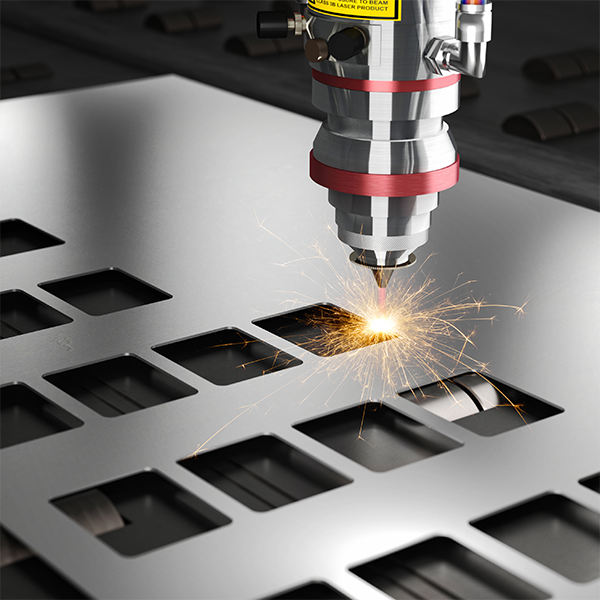
How a laser cuts a metal sheet
Metal laser cutting uses a focused beam to heat material along a cutting path. The heated material melts or vaporises, and cutting gas helps clear molten material from the gap, called the kerf. Moving the cutting head or workpiece along the contour produces the shape. TRUMPF’s explanation of laser cutting describes the process in more detail.
For a sheet metal job, the drawing defines the outlines and internal cut-outs. Cutting gives you a flat part; bending, welding and other finishing steps need their own requirements. A laser is a useful way to produce different profiles from a digital design, but it does not remove the need to check the drawing and the finished part’s intended use.
Material and thickness matter
Different machines have different cutting capabilities. At Shug in Mooroolbark, our range is mild steel up to 10 mm, stainless steel up to 3 mm and aluminium up to 2 mm. Tell us the material grade, thickness and finish if your project needs a particular specification.
We do not promise a universal tolerance or a minimum feature size for every material. If your drawing has narrow slots, very small holes or critical dimensions, include those requirements so they can be discussed before ordering. See our metal laser cutting service for our capabilities.
Prepare a drawing the cutter can follow
Supply a vector file at 1:1 scale in millimetres. Shug accepts AI, EPS, DWG and DXF, with DXF preferred. Remove dimensions, borders, duplicate paths and other objects that should not be cut. Close the outlines and convert lettering to outlines. For a stencil, add bridges where inner shapes need to remain attached.
Read the drawing preparation guidelines for examples, or the beginner’s guide to ordering laser cut parts for a step-by-step checklist.
Quote your laser cutting job
Upload your prepared parts for an instant quote. If you need help converting a drawing or want to discuss additional fabrication, contact Shug about your project.

